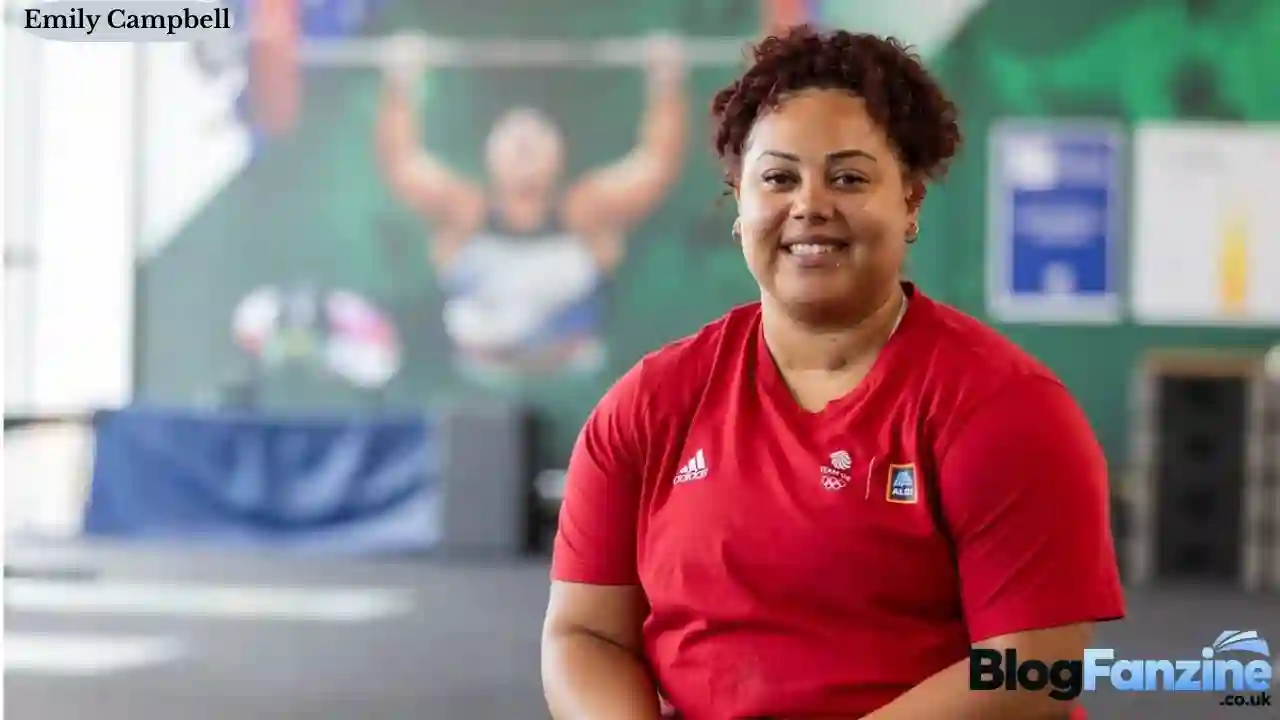
Emily Campbell: The British Weightlifter Rewriting History
Who Is Emily Campbell?
If you’ve followed British weightlifting over the last decade, there’s a good chance the name Emily Campbell has come up more than once — and for very good reason. Born on 6 May 1994 in Nottingham, Campbell has become the most decorated female weightlifter in British history, a title she has earned lift by lift, championship by championship.
What makes her story stand out isn’t just the medals, though. Campbell didn’t grow up dreaming of Olympic podiums. She discovered the sport relatively late, only picking up a barbell seriously in the build-up to the Rio 2016 Games. From there, her rise was remarkable, taking her from a curious newcomer to a genuine world-class competitor in a matter of years.
She competes for Atlas Weightlifting Club and lifts in the heaviest women’s category on the international circuit — the +86kg/+87kg division (the exact category boundary has shifted slightly between competitions over the years, but she’s always been at the top end of the weight classes). Alongside her competitive career, Campbell has become a prominent voice for body positivity and inclusivity in sport, using her platform to challenge outdated ideas about what a strong, successful female athlete looks like.
Quick biography facts:
- Full name: Emily Jade Campbell
- Born: 6 May 1994, Nottingham, England
- Sport: Olympic weightlifting
- Category: +86kg / +87kg (women’s super-heavyweight)
- Club: Atlas Weightlifting Club
Emily Campbell Weightlifting Career Timeline
Early Career and the Road to Rio 2016
Campbell’s introduction to competitive lifting came only shortly before the Rio 2016 Olympic cycle. Unlike many elite athletes who begin specialising as children, she came into the sport as an adult, which makes her subsequent achievements even more striking. Within a couple of years, she was already competing on the international stage and turning heads with her natural power and rapid technical development.
2018 Commonwealth Games — Gold Coast Bronze
Campbell’s first major international medal came at the 2018 Commonwealth Games in Gold Coast, Australia, where she claimed bronze in the +90kg category. It was an important marker — proof that the raw talent she’d shown domestically could translate into results against the best lifters in the Commonwealth.
Tokyo 2020 — A Historic Olympic Silver
This is the moment that changed everything for British weightlifting. At the delayed Tokyo 2020 Olympics (held in 2021 due to the pandemic), Campbell became the first British woman ever to win an Olympic medal in weightlifting, taking silver in the +87kg category. It was a landmark achievement, not just for her personally, but for the sport in Britain as a whole — suddenly, weightlifting had a genuine household name and a role model for a new generation of young female lifters.
2021–2023 — European Domination and a World Silver
Following her Olympic breakthrough, Campbell became European champion in 2021 in the +87kg category. She backed this up with a bronze medal at the World Championships that same year, which she later upgraded to silver at the 2022 World Championships in Bogotá, Colombia. By 2023, she had confirmed a hat-trick of successive European titles, cementing her status as the dominant force in her weight class on the continent.
Birmingham 2022 — Commonwealth Gold on Home Soil
If Tokyo was historic, Birmingham 2022 was personal. Competing at a home Commonwealth Games, Campbell won gold in the +87kg category with a new Commonwealth Games record — beating the defending champion and setting a personal best in the process. She has since described this moment as being at “the peak of her career,” and it’s easy to see why: an Olympic medal, a home crowd, and a Games record all in the same golden lift.
Paris 2024 — A Second Olympic Medal
Campbell returned to the Olympic stage in Paris 2024, this time competing in the +81kg category following changes to the weight classifications. She claimed bronze, becoming a two-time Olympic medallist and further confirming her place among the sport’s genuine elite. In the same year, she also won her fourth consecutive European title.
2025–2026 — More European Golds and Glasgow Glory
Campbell kept the momentum going with a fifth consecutive European title in 2025, followed by a sixth in 2026 — making her the first woman in the sport’s history to achieve six European titles. Then, at Glasgow 2026, she delivered arguably her most dominant performance yet.
Competing in the Women’s +86kg final at the SEC Armadillo on 30 July 2026, Campbell took control early, hitting a clean and jerk of 148kg on her first attempt before pushing it to 155kg on her second. With the gold medal already secure, she called for one final lift and produced a stunning 163kg clean and jerk — a new Commonwealth and Games record — to finish with a total of 278kg, more than 20kg clear of the silver medallist. It gave her back-to-back Commonwealth Games titles and cemented her status as a two-time Commonwealth champion.
Speaking afterwards, Campbell said she hadn’t lifted that heavy in a long time, adding that watching the lift back, it looked “very nearly technically perfect.”
Emily Campbell’s Major Titles and Records
Here’s a snapshot of Campbell’s standout achievements across the major competitions:
- Olympic Games: Silver (Tokyo 2020, +87kg), Bronze (Paris 2024, +81kg)
- Commonwealth Games: Gold (Glasgow 2026, +86kg), Gold (Birmingham 2022, +87kg), Bronze (Gold Coast 2018, +90kg)
- European Championships: Six-time champion (2021–2026), making her the first woman to achieve this feat
- World Championships: Silver (2022, Bogotá), Bronze (2021)
Taken together, these results make Campbell not just Britain’s most successful female weightlifter, but one of the most consistently dominant lifters on the international stage across an entire Olympic cycle and beyond.
Emily Campbell Beyond the Platform
Campbell’s influence extends well past competition results. She has become a well-known advocate for body positivity in sport, openly challenging narrow ideas of what strength and athleticism should look like. Her visibility as a plus-size, powerful, and unapologetically confident athlete has made her a genuine role model, particularly for young women who don’t see themselves reflected in traditional images of elite sport.
That advocacy work carried through into her role as an Official Ambassador for the Glasgow 2026 Commonwealth Games, where she helped promote the event across Scotland and the wider Commonwealth, encouraging community participation in sport well beyond the competition itself. Fittingly, she then went on to win gold at the very Games she’d helped promote.
What’s Next for Emily Campbell?
With six European titles, two Olympic medals, and back-to-back Commonwealth golds already secured, Campbell shows no signs of slowing down. Her consistency across multiple Olympic cycles suggests she’ll remain a key figure to watch at future major championships, and her ongoing advocacy work means her impact on the sport is likely to extend well beyond her own competitive career.
Frequently Asked Questions
How old is Emily Campbell?
Emily Campbell was born on 6 May 1994, making her in her early thirties as of 2026.
What weight category does Emily Campbell compete in?
She competes in the women’s super-heavyweight category, which has been designated +87kg, +81kg, and +86kg at different points depending on the competition and era’s weight classifications.
Has Emily Campbell won an Olympic medal?
Yes — she won silver at Tokyo 2020 and bronze at Paris 2024, making her a two-time Olympic medallist.
How many Commonwealth Games medals does Emily Campbell have?
Three: bronze at Gold Coast 2018, and gold at both Birmingham 2022 and Glasgow 2026.